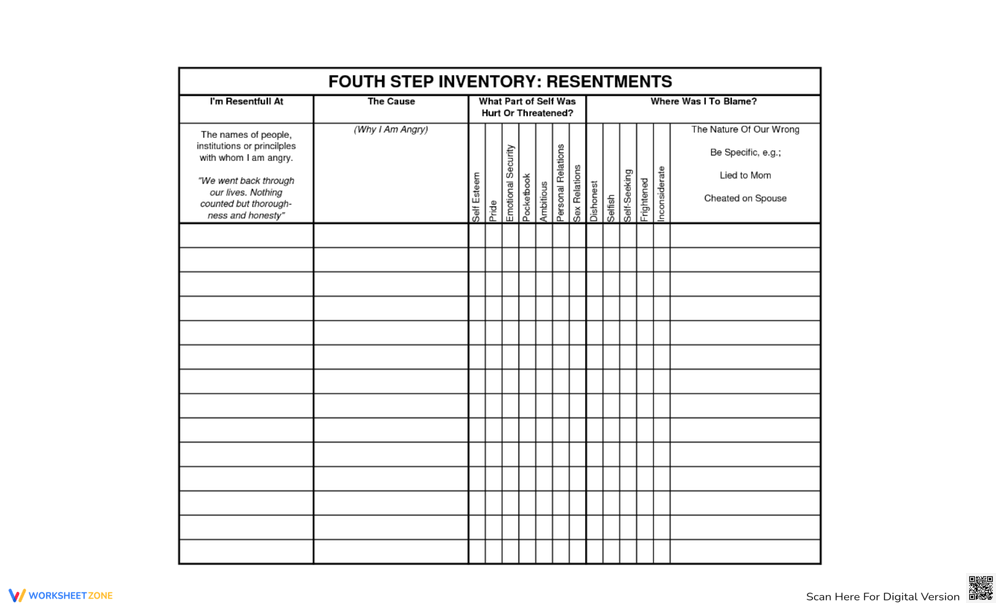
Embarking on the journey of recovery from addiction can be a challenging and overwhelming process. One of the key steps in many recovery programs is the 4th Step, which involves making a fearless and searching moral inventory of oneself. This step is crucial for individuals to take a deep look at their past behaviors, resentments, and character defects in order to move forward in their recovery.
The 4th Step Worksheet is a tool that is often used in recovery programs to help individuals work through this important step. It provides a structured format for individuals to examine their past actions, relationships, and patterns of behavior. The worksheet typically includes prompts and questions that guide individuals through the process of taking a thorough inventory of themselves.
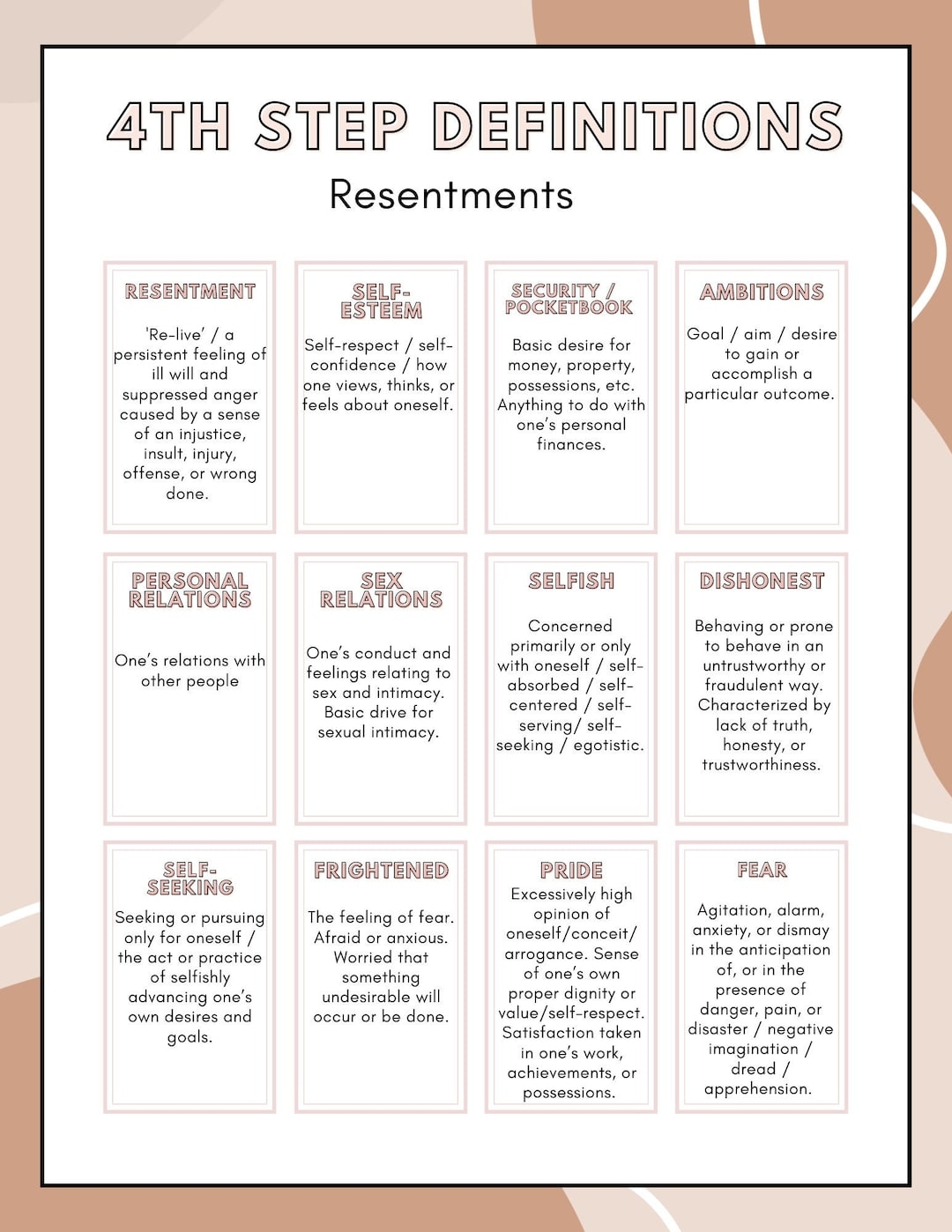 AA Step 4 Definitions Sheet Resentments Inventory Etsy Worksheets (worksheets.clipart-library.com)
One of the key aspects of the 4th Step Worksheet is the process of identifying and acknowledging resentments. Resentments are often a driving force behind addictive behaviors, and by addressing them head-on, individuals can begin to heal and let go of negative emotions that may be holding them back. The worksheet also helps individuals to identify their own character defects and patterns of behavior that may be contributing to their addiction.
Working through the 4th Step Worksheet can be a challenging and emotional process, but it is essential for individuals to confront their past in order to move forward in their recovery. By honestly examining their past actions and attitudes, individuals can begin to take responsibility for their behaviors and make amends where necessary. This step is a crucial part of the recovery process and can help individuals to develop a greater sense of self-awareness and personal growth.
In conclusion, the 4th Step Worksheet is a valuable tool for individuals in recovery to work through the process of taking a moral inventory of themselves. By using this worksheet, individuals can identify resentments, character defects, and patterns of behavior that may be contributing to their addiction. Working through this step is an important part of the recovery journey and can help individuals to heal and grow as they move forward in their sobriety.