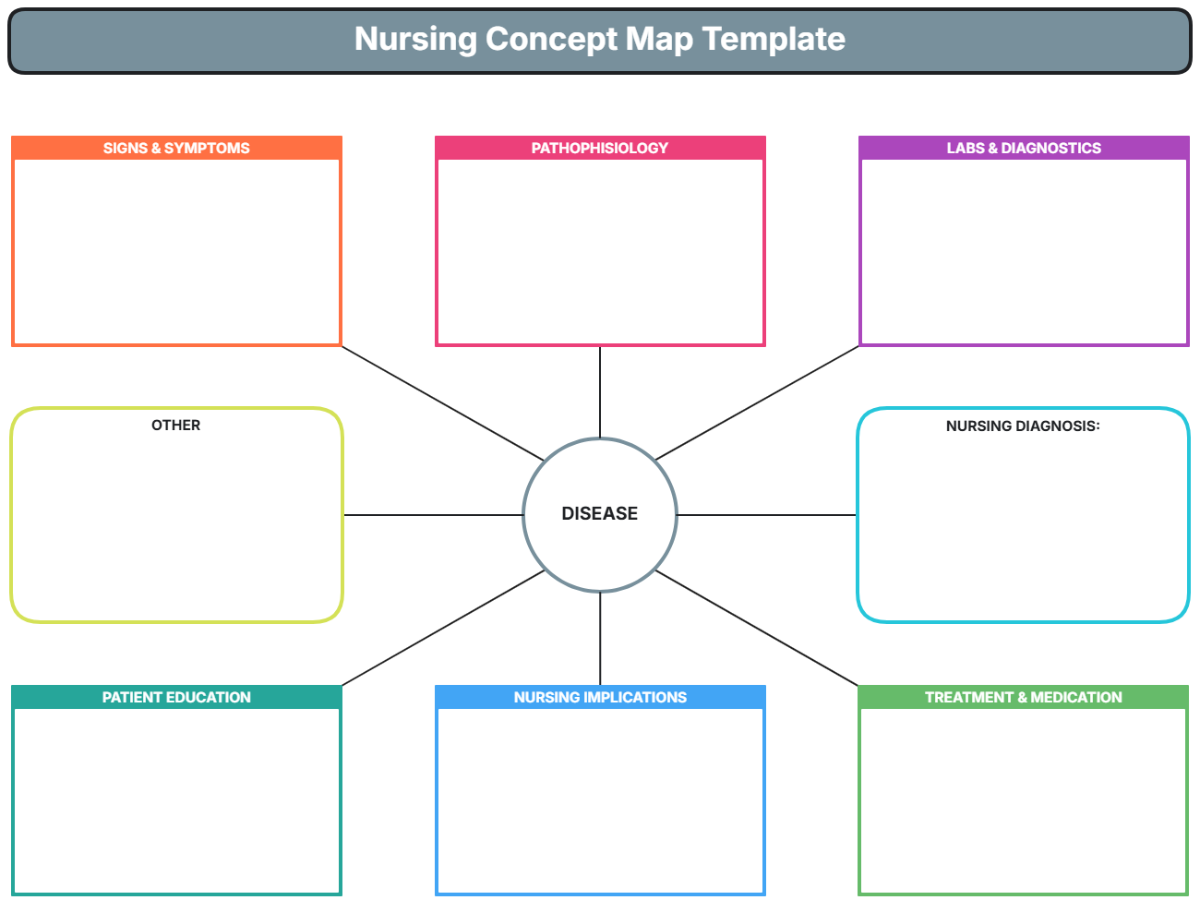
Concept mapping is a valuable tool in nursing education and practice. It allows nurses to visually organize and represent complex patient information in a structured format. By creating a concept map, nurses can identify relationships between patient data, develop care plans, and improve critical thinking skills.
Printable nursing concept map templates provide a convenient and easy-to-use resource for nurses to create their own concept maps. These templates typically include categories for patient assessment data, nursing diagnoses, interventions, and outcomes. Nurses can simply fill in the blanks with relevant information to create a comprehensive and organized concept map.
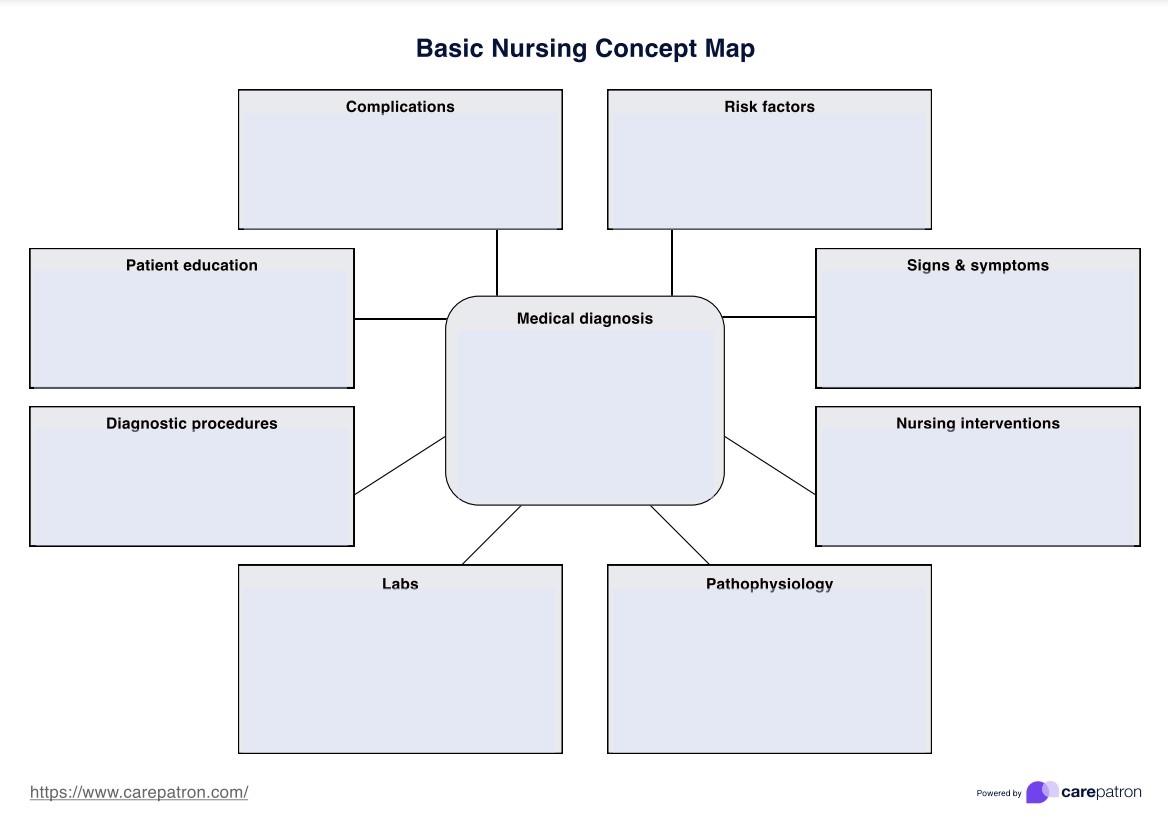 Printable Nursing Concept Map Template
Using a printable nursing concept map template can help nurses streamline their workflow and improve patient care outcomes. By visually representing patient information, nurses can easily identify gaps in care, prioritize interventions, and communicate effectively with other healthcare team members.
One of the key benefits of using a printable nursing concept map template is the ability to customize the template to fit specific patient cases or care scenarios. Nurses can add or remove categories, rearrange information, and highlight key data points to create a personalized concept map that meets the needs of their patients.
Overall, printable nursing concept map templates are valuable tools for nurses to enhance their critical thinking skills, improve patient care outcomes, and streamline their workflow. By utilizing these templates, nurses can efficiently organize and represent complex patient information in a structured format, leading to better care coordination and improved patient outcomes.
In conclusion, printable nursing concept map templates are essential resources for nurses in education and practice. By using these templates, nurses can enhance their critical thinking skills, improve patient care outcomes, and streamline their workflow. Incorporating concept mapping into nursing practice can lead to better care coordination, improved communication, and ultimately, better patient outcomes.